Feaor of God
There are moments when a partnership isn’t just a product drop, but a blueprint for where an entire industry is heading. The NFL’s new multi-year licensing deal with Jerry Lorenzo’s Fear of God is one of those moments.
For decades, the league has been a merchandising powerhouse, but functionally static: jerseys, hoodies, logos, repeat. This partnership rewrites that script. It positions the NFL not as a sports league that sells apparel, but as a luxury cultural entity leveraging design, identity, and storytelling to expand its universe.
Much like Patagonia proved that meaning can be an operating system, this deal proves that culture can be a growth strategy.
Fear of God reframed the identity of American sportswear through the lens of Black design, modern luxury, and cultural influence. And for the first time, NFL fanwear sits credibly in the same conversation as fashion houses shaping today’s culture.
This shift didn’t happen by accident. It happened because the league finally recognized what creators and cultural brands have known for years: if you want relevance, you must partner with people who create it.
The Business Model Behind the NFL’s Next Chapter
For years, the NFL’s apparel strategy was built on volume: broad distribution, mass-market licensing, predictable sales.
It worked, financially. But culturally, the league lagged behind global sports peers.
Feaor of God
The NBA had the tunnel.
F1 had the paddock.
European football had designer-athlete crossovers.
The NFL had only some jerseys and sideline gear.
Fear of God changes this framework entirely.
Instead of transactional licensing, this is cultural licensing, giving a designer the authority to reinterpret the league’s identity through his own universe. That is a fundamentally different business model.
Jerry Lorenzo isn’t just producing SKUs.
He is producing desire, the scarcest commodity in modern brand building.
And desire creates a different type of equity: cultural equity.
Cultural equity becomes brand equity.
Brand equity becomes IP.
This is a system Patagonia knows well, different vertical, same principle: when a brand’s meaning is consistent, the business compounds.
Culture Creates Equity. Equity Fuels Revenue.
The NFL’s brand limitations were never structural, they were aesthetic and cultural.
Fanwear was functional, not aspirational. Loyal, not influential.

Feaor of God
Fear of God closes that gap instantly.
With this partnership, the league gains:
➔ A premium aesthetic universe that competes with luxury streetwear
➔ Access to a design language already adopted by Gen Z and young millennial culture
➔ A bridge into fashion-first retail environments
➔ A new positioning where fanwear equals lifestyle, not just allegiance
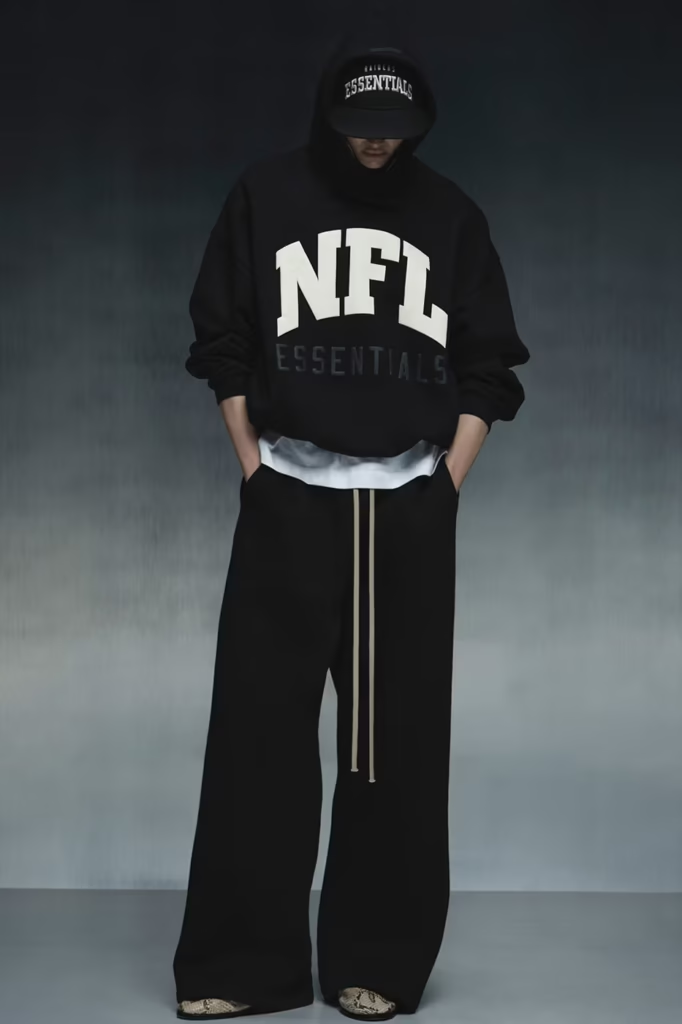
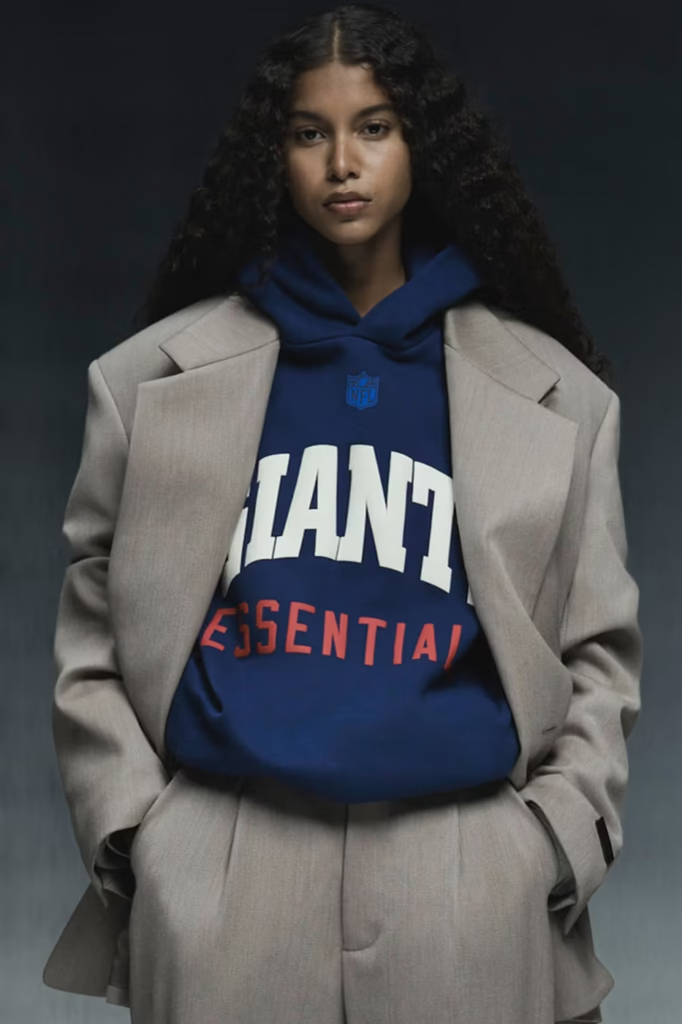
The debut collection — hoodies, outerwear, caps — is already circulating beyond sports fans. That is the unlock: when people who don’t watch football wear NFL-branded apparel because of the aesthetic, the NFL expands from a league to a lifestyle marker.
Just like Patagonia’s consistency built trust, Fear of God’s coherence builds cultural relevance.
That relevance translates into sales, directly and indirectly.
A Global Sports Business Built on Cultural Expansion
The NFL has been trying to globalize its footprint for years: London Games, Germany Games, youth programs, streaming deals.
But global relevance requires more than broadcasting rights. It requires cultural codes that travel.
Fear of God gives the league a design language that transcends geography.
Minimalist. Iconic. Luxury-adjacent. Culturally fluent.
This is the kind of visual identity that resonates in Seoul, Paris, Berlin, Tokyo, markets where the NFL has no organic heritage but massive potential.
This is not mass scale.
This is cultural scale.
Storytelling as Cultural Infrastructure
Fear of God is more than a brand. It is a worldview.
By entering that universe, the NFL gains something it has never had: a designer who can narrate what American sportswear means — its heritage, its Black cultural roots, its emotional resonance, its links to luxury.
This is storytelling-as-infrastructure.
Fear of God gives the league:
➔ A design story
➔ A cultural story
➔ A fashion story
➔ A new way to signal identity beyond fandom
When a brand can tell a story larger than its products, it strengthens loyalty even before a single purchase is made.
The Honesty and Intention That Build Cultural Credibility
Jerry Lorenzo has never been a trend-chaser.
Fear of God has remained consistent from day one: quality, restraint, spiritual undertones, American heritage, cultural reverence.
The NFL aligning with this philosophy signals something deeper:
The league finally acknowledges that credibility cannot be manufactured, it must be borrowed from people who already own it.
This is the opposite of shallow collaborations that disappear after one drop.
This is a multi-year commitment to design integrity.
The NFL Model (Emerging)
The NFL is no longer only a sports IP engine. It is evolving into a fashion and culture IP engine.
The early signs are clear:
➔ It treats apparel as brand equity, not merchandise.
➔ It partners with creators who shape culture, not just design product.
➔ It reframes fanwear as lifestyle wear.
➔ It opens new verticals of meaning, not just revenue.
➔ It uses licensing as a storytelling tool, not a distribution tactic.
This is a different league entering the cultural arena.